Slow Drains & Sewer Backups: Fall Warning Signs for Seattle Homeowners
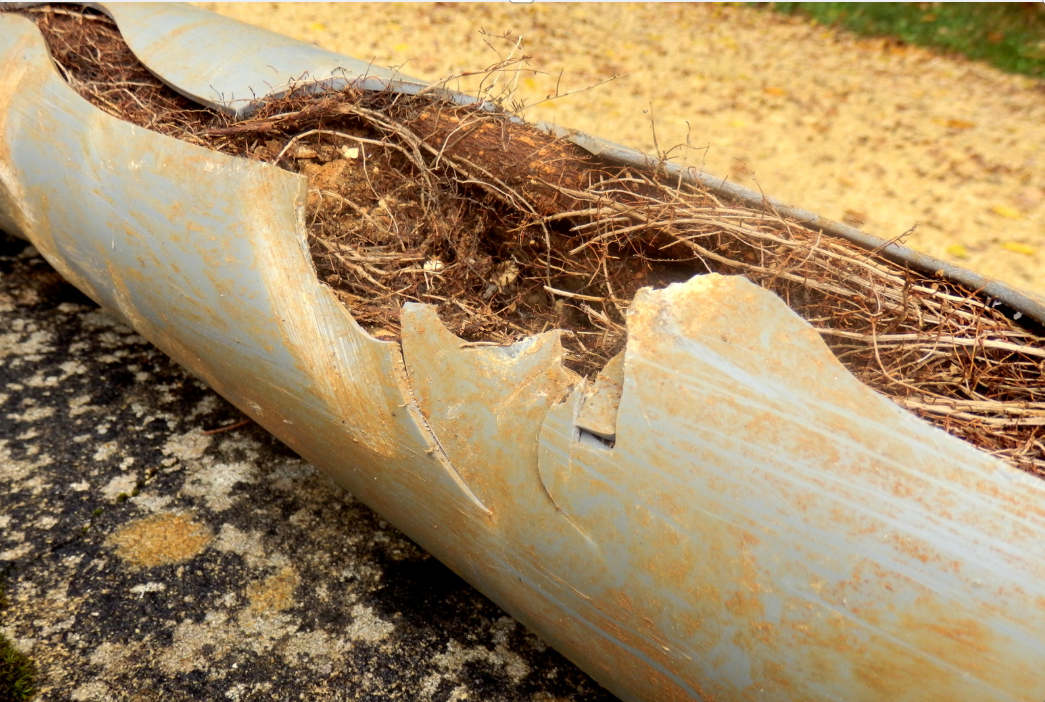
If your sewer line has been struggling, fall is when it’s most likely to let you know. Seattle’s wet season begins in mid-October, and November is typically the rainiest month of the year, averaging about 7.5 inches.
At the same time, tree roots are pushing out in search of water, and holiday cooking and houseguests send more water and grease down the drains than usual.
There is another detail that catches many local homeowners off guard: in Seattle, the sewer pipe running from your house to the city main under the street is yours, and so is the responsibility for maintaining it.
Here’s how to spot the early warning signs, what usually causes them, and when to schedule an inspection or sewer repair in Seattle before winter weather and the holidays arrive.
Why Fall Is Peak Season for Sewer Line Trouble
In the Seattle area, several seasonal changes arrive at once in fall, and together they put extra pressure on the pipe that carries wastewater away from your home.
- Tree roots are actively growing. Roots have a rapid growth spurt in fall. They look for water and nutrients while the soil is wet, and small cracks and loose joints in an aging sewer pipe are an easy source of both.
- The rain returns. Our technicians often see soggy soil and steady rain add stress to pipes that are already cracked, shifted out of line, or partly blocked.
- Households use more water during holidays. Extra cooking, houseguests, showers, laundry and dishwasher loads all land in a short window. A partial blockage that went unnoticed all summer can turn into a full backup.
- Many local sewer lines are decades old. Many Seattle neighborhoods have older sewer pipes, which are more vulnerable to root intrusion.
In older homes from Seattle to Everett, we see a lot of concrete, clay, cast iron, or even tile sewer lines with root intrusion, collapsed pipes, and old piping with the bottom corroded completely away. By the time a homeowner notices, waste meant for the sewer is already backing up into the home.
Know What You Own: Seattle’s Side Sewer Rules
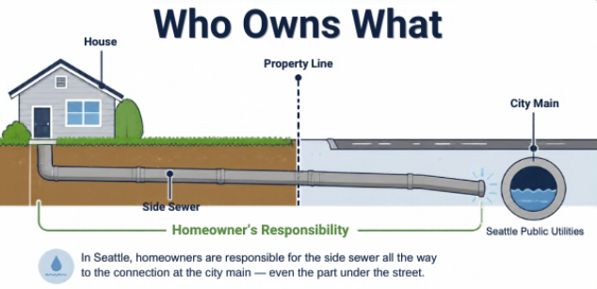
Many homeowners are surprised by how much of the sewer line belongs to them. The side sewer is the privately owned pipe that carries wastewater from your home to the public sewer main, which usually runs under the street or alley. In Seattle, the property owner is responsible for the side sewer all the way to that main, including the section under the street.
Here’s how responsibility breaks down:
- Your side sewer: You own and maintain it, from the house to where it connects to the main.
- The public main: Seattle Public Utilities (SPU) is responsible for it.
- Shared side sewers: If your line also serves a neighbor’s home, repairs have to be coordinated between owners.
Tip: Not sure where your line runs? SPU notes that you can look up your property’s side sewer records through the Seattle Department of Construction & Inspections (SDCI).
Outside Seattle, in Lynnwood, Edmonds, Everett, Bothell and the other communities we serve, ownership boundaries and rules vary by city or sewer district. Your local utility can tell you where your responsibility ends.
Early Warning Signs You Shouldn’t Ignore
Most sewer problems give you a heads-up first. The key is knowing which clues point past a single drain to the line under your yard.
- Multiple drains are sluggish. A bathroom sink that takes its time is usually a simple clog. When the tub, kitchen sink and toilet all slow down together, the holdup is likely farther down, in the line they all share.
- Your plumbing makes noise. A toilet that gurgles when the dishwasher empties is a sign that air is being forced back up through the pipes because water can’t get past a blockage.
- Water pools where it shouldn’t. A basement floor drain or ground-floor shower sits lowest in the system, so it’s the first place water comes back up when the line can’t keep up. This often happens right after a load of laundry.
- You can smell sewage. Start with drains you rarely use. Each one has a P-trap, a curved section of pipe that holds a little water to seal out sewer gas. If it dries out, odors can slip through. If running water doesn’t clear the smell, the line itself may be cracked or blocked. This could also be an indicator of an issue with the vent system to your drain system.
- The same clog keeps returning. A drain that clears and then slows again within weeks usually has a problem farther down the line, not in the fixture itself. This could include poor grade or improper drain, waste, and ventilation installation.
- Part of your yard looks different. A spongy patch or a strip of grass greener than the rest can mean the pipe underneath is leaking.
These symptoms usually trace back to common causes like grease buildup, tree roots or a cracked pipe.
Quick triage: What’s your plumbing telling you?
What you notice | What it likely means | Next step |
One slow drain | A clog in that fixture | Clear the fixture or call for a drain cleaning |
Several slow or gurgling drains | A main line or side sewer issue | Schedule an inspection |
Sewage coming up a drain | A blockage in the sewer line | Stop using water and call a plumber |
Tree Roots: The Top Fall Culprit in Older Seattle Neighborhoods
Mature trees are part of what makes Seattle’s older neighborhoods so appealing, but their roots don’t stick to property lines. A sewer pipe is a steady source of water and nutrients, and even a hairline crack or a slightly loose joint releases enough moisture to draw roots in.
Once inside, fine roots spread into a net that snags grease, toilet paper and other debris. Over time, that tangle narrows the pipe until water can barely get through.
Store-bought root killers can seem like an easy answer. But they won’t break down an established root mass, and harsh products can wear away at older pipes. Here’s more on why chemical drain cleaners won’t clear roots.
A professional sewer cleaning will cut roots out of the line, but roots that found a way in once will often come back. That’s why Seattle Public Utilities recommends a camera inspection after clearing. The video shows whether the pipe is damaged and where the roots are getting in. Ask for a copy of the footage and make a note of the problem spot for next time. Spotting the damaged section can help present options for a proper repair on the sewer line. Pipe lining using trenchless technology is often suggested to minimize access points for root intrusion.
How often should you have the line inspected? SPU’s guidance:
- At least once every 8–10 years
- Every 2–3 years if large trees or shrubs grow near the line
- Before you buy a home
- Any time a sewer line is serviced due to a clog
Holiday Kitchens: The Stress Test for a Weak Sewer Line
A partly blocked sewer line can get by for months under everyday use. The holidays change that. Roasts, gravies and fried dishes leave behind fats, oils and grease, and once they go down the sink, even small amounts cool and harden on the pipe walls. The number one cause for kitchen sink clogs is grease build up from foods and cooking. That buildup catches everything that comes after it. Add a houseful of guests taking showers, flushing toilets and running the dishwasher, and a line that was barely keeping up may finally back up.
There are a few simple ways to keep grease out of your pipes:
- Cooking oil: Let it cool, seal it in a jug, and set it out next to your recycling cart on collection day.
- A little grease: Wipe it up with a paper towel and add it to your food and yard waste.
- A lot of grease: Seal it in a container and put it in the garbage.
- Food Disposal: A garbage disposal is not a license to put anything and everything down the drain. If it can go in the trash bin, do that before washing down the drain. Clean off food waste into the garbage bin or compost bin, not down the drain will also minimize grease build up.
For more holiday kitchen tips, see our garbage disposal do’s and don’ts.
What You Can Do Now, Before the Holidays
A few small habits and one phone call can take a lot of pressure off your sewer line this season.
- Toilets are meant for toilet paper and human waste only. Wipes (even ones labeled ‘flushable’), grease and food scraps belong in the trash or compost.
- Our technicians recommend finding your sewer cleanout (the capped pipe that gives direct access to your line) ahead of time, so that if trouble starts, we can reach the line without delay.
- Book a camera inspection if any of these apply:
- You’ve noticed any of the warning signs above.
- Large trees grow near your line, or roots have been cleared before.
- Your home is older, or the line hasn’t been inspected in 8–10 years.
If a Backup Happens: What to Do First
Sewage coming up through a drain is unpleasant, but a few quick steps can limit the damage and keep everyone safe.
- Pause all water use. Every flush, load of laundry or dishwasher cycle adds to the backup, so hold off until the line is cleared.
- Make the area safe. If you can reach the breaker without stepping into water, shut off power to the affected space. Keep children and pets away from contaminated water. Do not attempt to treat the drain with chemicals.
- Get help. Our team offers 24/7 emergency plumbing, so you can reach a technician whenever a backup happens.
- Keep a record. Take photos of the damage and save your cleanup receipts. If the backup turns out to be caused by a problem in the city’s main, you may be able to file a claim.
When to Call a Professional for Sewer Line Repair in Seattle
When the signs point to the line itself, it’s time to have a professional take a look. Give us a call if you see:
- Clogs that keep coming back
- Several drains slowing or gurgling at the same time
- Any sewage backing up into the house
- A sewer smell that a dry P-trap doesn’t explain
- Roots that have been cleared from the line before
- Drains that do not evacuate swiftly
Our team provides sewer repair in Seattle and across the greater Seattle area, from sewer and drain cleaning to sewer line repair or replacement. A video camera inspection lets us see inside the pipe and find roots, cracks, corrosion, collapsed sections or even lost objects, so you know what’s going on before you decide on a fix.
If the line needs replacing, we offer free estimates, and you can read up on your sewer line repair and replacement options ahead of time. If a problem can’t wait, we’re available 24/7.
Fall is a smart time to have your line checked. Booking a sewer camera inspection before Thanksgiving means you’ll know your plumbing is ready for a full house. Head here to see our current specials.
Your Fall Sewer Checklist
Before the rain settles in and the guest room fills up, take a few minutes to run through this list:
- Watch and listen. Look for slow drains, gurgling, sewer odors or soggy spots in the yard.
- Count the drains. One slow fixture is usually a local clog. Several at once point to the sewer line.
- Know your stretch of pipe. In Seattle, your responsibility runs all the way to the city main.
- Get ahead of the holidays. Schedule an inspection if your line is older, surrounded by big trees or overdue for a check.
If anything on this list sounds familiar, our team can take a closer look and recommend the right next step. Whether you need Seattle sewer repair or just a seasonal camera inspection, now is a good time to get in touch, before heavy rain and holiday guests put your line to the test.